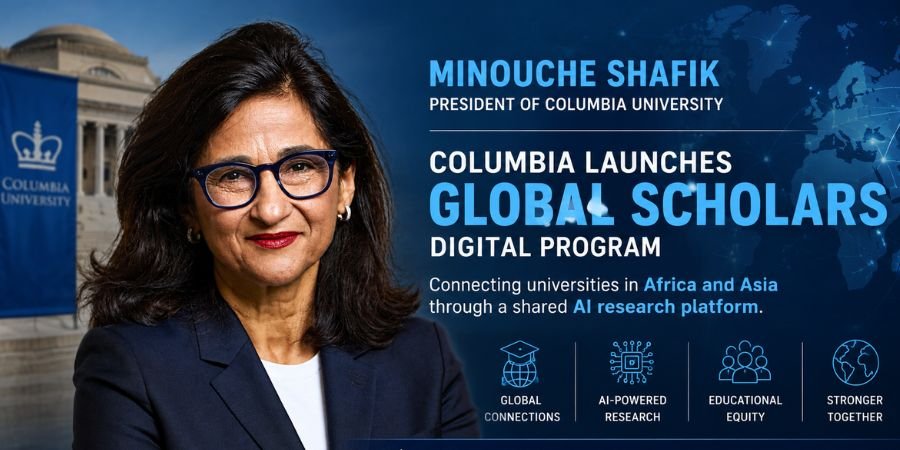
The Minouche Shafik Global Scholars Program is drawing international attention after the president of Columbia University announced a new digital initiative designed to connect universities across Africa and Asia through a shared artificial intelligence research platform.
Dr. Shafik revealed that the program will allow students, researchers, and academic institutions to collaborate on AI-focused projects regardless of geographic location. The initiative is expected to strengthen access to advanced research opportunities for universities that traditionally face technological and funding limitations.
Education leaders worldwide are closely watching the Minouche Shafik Global Scholars Program because it represents a major effort to reduce global inequality in higher education while expanding international academic collaboration in emerging technologies.
A New Era of Global AI Collaboration
According to Columbia University officials, the platform will support joint AI research, digital classrooms, shared academic resources, and cross-border mentorship programs. Universities from several countries in Africa and Asia are expected to participate during the first phase of the rollout.
The Minouche Shafik Global Scholars Program aims to create a connected academic ecosystem where institutions can share expertise, research infrastructure, and innovation strategies. The move comes at a time when universities worldwide are racing to expand their AI capabilities.
Dr. Shafik emphasized that access to cutting-edge technology should not be limited to a small group of elite institutions. Instead, the initiative focuses on building broader participation in AI research and digital education.
Why the Initiative Is Trending Globally
The announcement has quickly become a major topic among international education leaders because it addresses one of the most pressing issues in higher education: educational equity in the digital age.
Many universities in developing regions continue to face challenges related to funding, research access, and technological infrastructure. The Minouche Shafik Global Scholars Program is being viewed as a practical model for narrowing that gap through global partnerships and shared digital resources.
The initiative also arrives as artificial intelligence continues reshaping industries, economies, and academic systems worldwide. Experts say universities that fail to adopt AI-driven learning and research models risk falling behind in the global education landscape.
Columbia University Expands Its Global Education Strategy
Under Dr. Shafik’s leadership, Columbia University has increasingly focused on international collaboration and technology-driven learning. The new Global Scholars initiative aligns with broader efforts to modernize higher education and strengthen partnerships between institutions across continents.
Analysts believe the shared AI research platform could help accelerate innovation in areas such as healthcare, climate science, economics, and public policy. By connecting researchers from different regions, the program may also encourage more diverse perspectives in AI development.
The Minouche Shafik Global Scholars Program could further enhance Columbia University’s position as a leading institution in global academic innovation.
What Comes Next for the Global Scholars Program
The first participating universities and research partnerships are expected to be announced in the coming months. Education experts will be watching closely to see how the platform scales and whether additional institutions from other regions join the initiative.
If successful, the Minouche Shafik Global Scholars Program could become a blueprint for future international AI education networks, potentially reshaping how universities collaborate in the digital era.
Also Read: Oxford Climate Research Institute Launches Under Irene Tracey