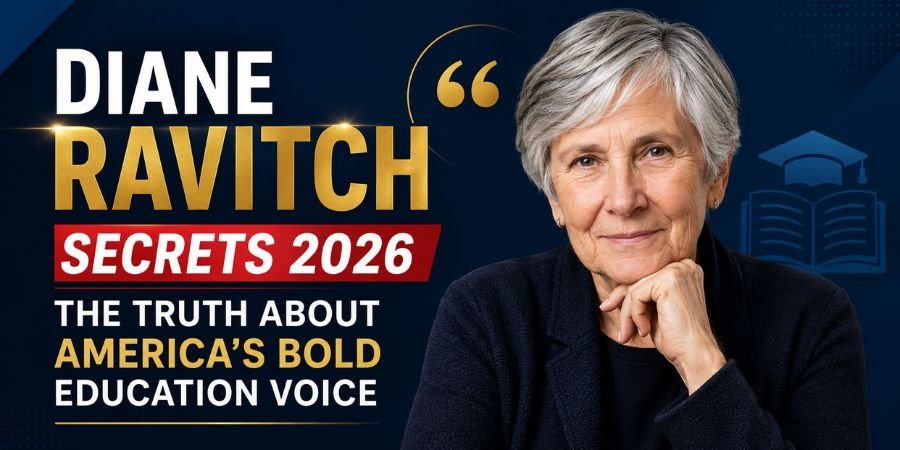
Education debates rarely stay quiet for long, but certain voices continue to dominate the conversation year after year. Diane Ravitch remains one of those names that instantly sparks discussion among teachers, parents, policymakers, and education researchers. Her journey from supporting standardized reforms to becoming one of their most vocal critics created one of the most fascinating transformations in modern education history. In 2026, her ideas still influence school systems, classroom policies, teacher advocacy groups, and public education discussions across the United States and beyond. Whether people agree with her or challenge her opinions, Diane Ravitch continues to shape the direction of educational thinking in ways that few public intellectuals ever achieve.
Who Is Diane Ravitch and Why Does She Matter in 2026?
Diane Ravitch is an American historian of education, author, professor, and policy critic known for her strong defense of public schools. Over the decades, she became one of the most recognizable figures in education reform discussions. What makes her especially unique is that she once supported accountability-based reforms before publicly reversing her position after observing their real-world effects.
That transformation gave Diane Ravitch unusual credibility. She did not criticize educational reform from the outside. Instead, she criticized it after actively participating in the system and studying its outcomes. Many educators respect her because she openly admitted that some policies she once endorsed created unintended damage inside schools.
In 2026, discussions around school funding, teacher shortages, charter schools, testing pressure, curriculum control, and student inequality continue to dominate headlines. Diane Ravitch remains deeply connected to these conversations because her books, interviews, articles, and speeches still offer relevant insights into problems schools face today.
The Early Career of Diane Ravitch
Long before becoming a major public figure, Diane Ravitch built her reputation as a historian and researcher focused on American education. She studied how school systems evolved and how educational policy influenced democracy, citizenship, and equal opportunity.
During the early stages of her career, Diane Ravitch supported standards-based reforms. Like many policymakers of the era, she believed strong accountability measures could improve educational quality and help close achievement gaps between students from different backgrounds.
She served as Assistant Secretary of Education during the administration of President George H. W. Bush. At the time, many reformers believed testing, measurable outcomes, and competition would push schools toward better performance. Diane Ravitch initially agreed with several of these ideas because they appeared logical on paper.
However, years of observation slowly changed her perspective.
The Turning Point That Changed Diane Ravitch’s Reputation
One reason Diane Ravitch became such a significant figure is because she publicly changed her mind. That decision dramatically separated her from many political commentators who rarely admit policy mistakes.
As charter school expansion accelerated and standardized testing became increasingly dominant, Diane Ravitch began noticing troubling consequences. Schools started focusing heavily on test preparation. Teachers faced enormous pressure to produce scores rather than inspire curiosity. Arts programs, creativity, and broader educational experiences often received less attention.
She also observed growing inequalities in education systems where schools in wealthier communities had far more resources than schools serving low-income neighborhoods.
Instead of quietly shifting her opinions, Diane Ravitch openly explained why she believed some reforms were harming public education. Her famous book The Death and Life of the Great American School System became a defining moment in educational debate.
That honesty transformed her into a powerful voice for educators who felt unheard during aggressive reform movements.
Why Diane Ravitch Criticizes Standardized Testing
One of Diane Ravitch’s most recognized positions involves criticism of excessive standardized testing. She does not argue against assessment entirely. Instead, she argues that overreliance on testing damages learning environments.
According to Diane Ravitch, schools become too narrow when test scores dominate every decision. Teachers may feel pressured to “teach to the test” rather than encourage deeper understanding, creativity, discussion, and critical thinking.
Several common concerns appear repeatedly in her work:
- Students experience increased stress and anxiety
- Teachers lose flexibility in classroom instruction
- Creative subjects receive less priority
- Schools serving disadvantaged communities face harsher penalties
- Education becomes more focused on numbers than human growth
In 2026, these concerns remain highly relevant. Many parents continue questioning whether children are learning meaningful life skills or simply preparing for exams.
Diane Ravitch often emphasizes that great education cannot always be measured through multiple-choice tests. She believes curiosity, imagination, empathy, civic understanding, and independent thought matter just as much as measurable academic performance.
Diane Ravitch and the Public School Debate
Public education remains at the center of Diane Ravitch’s philosophy. She strongly believes public schools serve an essential democratic purpose.
For Diane Ravitch, schools are not merely institutions designed to produce workers. They are community spaces where children from different backgrounds learn to participate in society together.
This perspective explains why she frequently challenges policies that aggressively privatize education. She argues that public schools deserve investment, support, experienced teachers, and stable funding instead of constant blame.
Her critics sometimes accuse her of resisting innovation, but supporters argue Diane Ravitch protects educational equity against systems driven primarily by competition and profit.
The public school debate became even more intense after the rapid expansion of charter schools across America. Diane Ravitch consistently questioned whether charter systems truly improved education overall or simply shifted resources away from traditional public schools.
What Diane Ravitch Says About Charter Schools
Charter schools remain one of the most controversial topics connected to Diane Ravitch.
Initially, she supported the charter school movement because it promised innovation and flexibility. Over time, however, Diane Ravitch concluded that many charter systems failed to deliver the improvements reformers promised.
Her concerns include:
Unequal Access
Diane Ravitch argues some charter schools indirectly exclude certain students, including those with severe disabilities or behavioral challenges.
Resource Diversion
She believes rapid charter expansion can reduce funding available for traditional public schools, especially in financially struggling districts.
Lack of Accountability
According to Diane Ravitch, some privately managed charter organizations operate with insufficient transparency.
Teacher Burnout
She also criticizes environments where inexperienced teachers face overwhelming pressure and high turnover.
Supporters of charter schools disagree strongly with these criticisms and point to successful charter institutions that improved opportunities for underserved students.
Still, Diane Ravitch continues influencing national discussions because she frames education not simply as a market competition but as a public responsibility.
The Influence of Diane Ravitch on Teachers
Teachers often describe Diane Ravitch as someone who genuinely listens to classroom realities.
Many educators feel educational policy gets designed far away from actual classrooms. Diane Ravitch frequently highlights teacher voices and argues that experienced educators should play a larger role in shaping policy decisions.
In speeches and articles, she repeatedly stresses that teachers are not the enemy of educational improvement. Instead, she believes strong teachers represent the foundation of successful schools.
This message resonated deeply during years when teachers felt blamed for systemic problems involving poverty, underfunding, overcrowded classrooms, and social inequality.
By 2026, teacher burnout and staffing shortages remain serious concerns across multiple regions. Diane Ravitch’s advocacy for professional respect, fair compensation, and realistic expectations continues attracting support from education professionals.
Diane Ravitch’s Most Important Books
Several books helped establish Diane Ravitch as a major intellectual figure in education.
The Death and Life of the Great American School System
This book became one of the most influential critiques of modern education reform. Diane Ravitch explains why she changed her views on testing, privatization, and accountability systems.
Reign of Error
In this work, Diane Ravitch challenges claims that public schools are failing beyond repair. She argues many educational problems are deeply connected to poverty and inequality.
Slaying Goliath
This book focuses on teachers, parents, and activists who resisted policies they believed harmed public education.
Left Back
An earlier historical work examining debates over progressive education in America.
These books remain widely discussed because Diane Ravitch combines historical analysis with contemporary policy criticism.
Why Diane Ravitch Still Trends in Education Discussions
Even after decades in public life, Diane Ravitch continues appearing in educational debates because many issues she warned about remain unresolved.
Topics connected to her work include:
- Teacher shortages
- Education inequality
- Testing pressure
- Public school funding
- Curriculum battles
- Student mental health
- Privatization concerns
- Classroom autonomy
In 2026, social media and online education communities frequently reference Diane Ravitch whenever new school reform proposals emerge.
Her supporters see her as a defender of educational humanity. Critics argue she sometimes underestimates the need for structural reform. Either way, her influence remains undeniable.
The Core Philosophy Behind Diane Ravitch’s Ideas
At the center of Diane Ravitch’s philosophy is a relatively simple belief: education should strengthen democracy and serve all children fairly.
She repeatedly argues that schools cannot solve every social problem alone. Poverty, housing instability, healthcare inequality, and food insecurity all affect student performance.
Because of this perspective, Diane Ravitch often criticizes policies that judge schools entirely through test outcomes without addressing broader social conditions.
Her philosophy also emphasizes:
- Respect for educators
- Broad liberal arts education
- Civic learning
- Historical understanding
- Equal opportunity
- Community investment
- Student well-being
Rather than viewing education purely through economic productivity, Diane Ravitch sees schools as essential civic institutions.
Criticism Faced by Diane Ravitch
No influential public figure escapes criticism, and Diane Ravitch is no exception.
Some reform advocates argue her opposition to charter schools overlooks successful examples that helped disadvantaged students.
Others claim Diane Ravitch romanticizes traditional public education without offering enough practical alternatives for struggling districts.
Critics also argue that accountability systems became necessary because some schools historically failed underserved communities without facing consequences.
Despite these disagreements, many observers still respect Diane Ravitch because she grounds arguments in historical analysis and openly acknowledges complexity.
Unlike highly partisan commentators, she often discusses the unintended consequences of policy rather than simplifying education into ideological slogans.
How Diane Ravitch Changed Public Conversations About Schools
Before Diane Ravitch shifted her position, many mainstream education discussions strongly favored market-driven reform models.
Her public reversal forced policymakers, journalists, and researchers to reexamine assumptions about testing and privatization.
She helped normalize critical questions such as:
- Are standardized tests overused?
- Should schools compete like businesses?
- How much influence should private organizations have?
- Are teacher evaluations fair?
- Does poverty influence educational outcomes more than policymakers admit?
These questions became central to modern educational debate partly because Diane Ravitch consistently pushed them into public conversation.
Diane Ravitch and Educational Equity
Educational equity remains one of the strongest themes throughout Diane Ravitch’s work.
She frequently argues that unequal school funding creates major barriers for students from low-income communities.
In many areas, schools depend heavily on local property taxes, which means wealthier neighborhoods often provide better-funded educational environments.
Diane Ravitch believes this structure reinforces inequality rather than reducing it.
She also argues that policymakers sometimes use test scores to label schools as failures without addressing the underlying economic challenges affecting students.
Her perspective encourages people to think about education not only as an academic issue but also as a social justice issue.
What Parents Can Learn From Diane Ravitch
Parents who explore Diane Ravitch’s work often become more aware of how educational policies affect classroom experiences.
Some practical lessons connected to her ideas include:
Look Beyond Test Scores
Strong education involves creativity, emotional development, communication skills, and curiosity.
Support Teachers
Teachers perform better when communities respect and support them.
Stay Involved in Local Education
School board decisions can significantly influence curriculum, resources, and classroom policies.
Ask Questions About Funding
Understanding how schools receive funding helps parents recognize structural inequalities.
Value Well-Rounded Learning
Arts, music, history, science, and civic education all contribute to student growth.
Diane Ravitch consistently encourages active public participation in educational discussions.
The Digital Age and Diane Ravitch’s Relevance in 2026
Technology transformed education dramatically over the last decade. Online learning, AI tools, digital classrooms, and virtual resources changed how students access information.
Yet many of Diane Ravitch’s warnings still apply.
In 2026, schools continue struggling to balance technology with meaningful human interaction. Some districts heavily emphasize data tracking and algorithm-based educational systems.
Diane Ravitch’s broader message reminds educators that learning remains fundamentally human.
Technology can support instruction, but it cannot fully replace mentorship, creativity, empathy, classroom discussion, and community engagement.
As AI-driven educational systems become more common, debates around student privacy, educational equity, and teacher roles increasingly reflect concerns Diane Ravitch raised years earlier.
Why Students Indirectly Benefit From Diane Ravitch’s Advocacy
Even students unfamiliar with Diane Ravitch benefit indirectly from discussions she influenced.
Policies connected to reduced testing pressure, broader curriculum development, teacher support, and mental health awareness often align with ideas she promoted.
Students thrive when schools encourage exploration rather than constant performance anxiety.
Diane Ravitch repeatedly argues that children should experience education as an opportunity for intellectual growth, not endless measurement.
This perspective became increasingly important as student stress and burnout gained national attention.
Diane Ravitch’s Legacy in Modern Education
Legacy is rarely simple, especially in education where policy debates evolve constantly.
Still, Diane Ravitch already secured a lasting place in educational history.
Her willingness to challenge powerful reform movements changed public dialogue around schools. She encouraged millions of teachers and parents to question assumptions about accountability, privatization, and standardized testing.
Even critics acknowledge that Diane Ravitch forced more nuanced conversations about educational policy.
Her books continue appearing in university courses, teacher training discussions, education conferences, and policy debates.
In 2026, her influence extends far beyond academic circles because public education affects nearly every family in some way.
Lessons Future Policymakers Can Learn From Diane Ravitch
Educational reform often sounds attractive when presented through simple slogans. Diane Ravitch consistently warns against oversimplified solutions.
Future policymakers can learn several important lessons from her career:
Real Schools Are Complex
Educational systems involve social, economic, emotional, and cultural factors.
Data Alone Cannot Explain Everything
Test scores provide information, but they cannot fully capture student growth.
Teachers Need Professional Respect
Policies work better when educators participate in decision-making.
Poverty Matters
Schools cannot solve inequality entirely without broader social support systems.
Public Trust Is Essential
Communities need confidence that education serves students rather than political agendas.
Diane Ravitch’s career demonstrates the importance of reevaluating policies when evidence reveals unintended consequences.
The Emotional Side of Diane Ravitch’s Popularity
Part of Diane Ravitch’s popularity comes from emotion, not just policy analysis.
Teachers often feel emotionally exhausted by constant criticism and unrealistic expectations. Parents worry about children experiencing stress-heavy learning environments. Students sometimes feel trapped inside systems focused more on scores than curiosity.
Diane Ravitch speaks directly to those frustrations.
Her writing often sounds passionate because she views education as deeply connected to human dignity and democratic society.
That emotional connection explains why her audience remains loyal even during controversial debates.
Why Diane Ravitch Continues Inspiring Education Activists
Grassroots education activism expanded significantly over the last decade. Parents, teachers, and community groups increasingly organize around school funding, curriculum decisions, testing policies, and teacher rights.
Diane Ravitch became an important intellectual influence for many of these movements.
Her work encourages citizens to engage actively rather than assuming educational policy should remain exclusively in expert hands.
In 2026, education activism continues growing as communities debate AI learning systems, digital surveillance in schools, curriculum standards, and educational inequality.
Many activists still reference Diane Ravitch because her arguments emphasize democratic participation and public accountability.
The Bigger Meaning Behind Diane Ravitch’s Story
Beyond education itself, Diane Ravitch represents something larger: the willingness to publicly rethink beliefs.
In highly polarized environments, changing one’s mind often attracts criticism from all sides. Diane Ravitch nevertheless chose to explain why her perspective evolved.
That intellectual honesty became one of the defining features of her reputation.
Her story demonstrates that expertise is not about stubborn certainty. Sometimes genuine expertise involves recognizing when evidence challenges previous assumptions.
This aspect of Diane Ravitch’s journey resonates far beyond educational policy.
FAQs About Diane Ravitch
Why is Diane Ravitch famous?
Diane Ravitch is famous for her work as an education historian, author, and critic of standardized testing and school privatization. She became especially influential after publicly changing her views on education reform.
What does Diane Ravitch believe about public schools?
Diane Ravitch strongly supports public education and believes public schools are essential for democracy, equal opportunity, and community development.
How did Diane Ravitch change her views?
After initially supporting accountability reforms and charter schools, Diane Ravitch later concluded that many policies created harmful side effects such as excessive testing pressure and weakened public school systems.
What are Diane Ravitch’s most popular books?
Some of Diane Ravitch’s most well-known books include The Death and Life of the Great American School System, Reign of Error, Slaying Goliath, and Left Back.
Why is Diane Ravitch still relevant in 2026?
Diane Ravitch remains relevant because debates around testing, teacher shortages, school funding, educational inequality, and public education continue shaping national discussions.
Conclusion
The conversation around education changes constantly, yet certain voices continue shaping how people think about schools, learning, and opportunity. Diane Ravitch remains one of the most influential education figures because she combines historical knowledge with direct criticism of policies she believes harm students and teachers. Her willingness to challenge powerful systems, admit changing perspectives, and defend public education keeps her relevant in 2026.
Whether readers agree with every argument or not, Diane Ravitch encourages deeper thinking about what schools should truly accomplish. That alone makes her impossible to ignore in modern educational debate. For parents, teachers, policymakers, and students trying to understand the future of education, exploring Diane Ravitch’s work remains a valuable place to start.
Also Read: 2026 Power Insight: Audrey Azoulay’s Transformational Leadership Driving UNESCO’s Global Impact