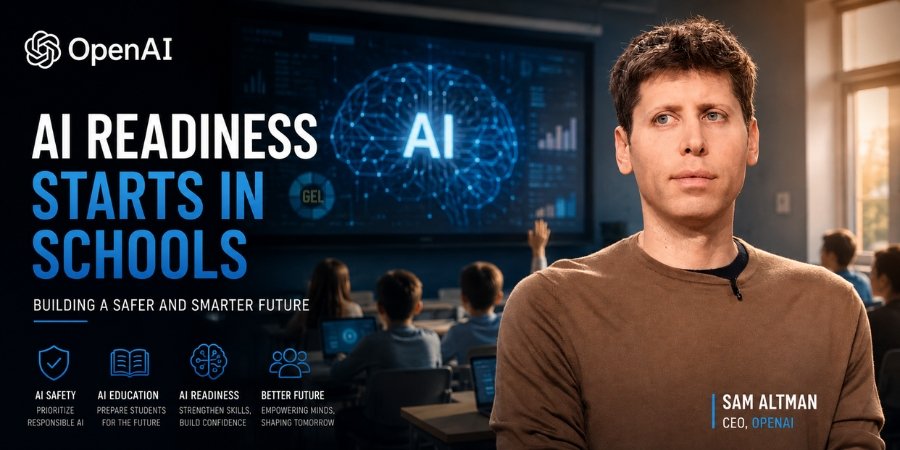
The conversation around education AI policy is no longer something reserved for policymakers or tech experts—it’s shaping the classrooms, careers, and futures of millions right now. As artificial intelligence rapidly integrates into schools, universities, and online learning platforms, the need for clear, thoughtful, and balanced policies has never been more urgent. This blog explores how education AI policy is evolving, why it matters, and what it means for students, educators, and institutions navigating this new era of learning.
A New Era Begins: When AI Walked Into the Classroom
It didn’t happen overnight.
At first, AI tools quietly assisted teachers—grading assignments, suggesting lesson plans, and personalizing content. Then, almost suddenly, students began using AI to write essays, solve problems, and even simulate conversations in foreign languages.
The shift was subtle but profound.
What started as support quickly turned into transformation. Traditional learning models began to blur, raising a pressing question: How do we regulate something that evolves faster than the systems built to manage it?
That’s where education AI policy enters the picture—not as a restriction, but as a framework to guide responsible innovation.
Why Education AI Policy Matters More Than Ever
Education has always been about more than just information—it’s about growth, ethics, and critical thinking.
AI, however, challenges these foundations in unique ways:
- It can generate answers instantly, reducing the need for deep thinking
- It raises concerns about academic integrity
- It introduces bias through algorithms
- It collects and processes sensitive student data
Without a well-defined education AI policy, these challenges can spiral into long-term consequences.
Policies are not meant to slow down progress. Instead, they ensure that innovation aligns with educational values.
The Double-Edged Sword of AI in Education
AI is powerful—but like any powerful tool, it must be handled with care.
On one side, it offers incredible advantages:
- Personalized learning paths tailored to each student
- Instant feedback and performance tracking
- Accessibility for students with disabilities
- Reduced administrative burden for educators
On the other side, it presents risks:
- Overdependence on AI-generated answers
- Data privacy concerns
- Lack of transparency in decision-making
- Potential loss of human connection in teaching
A strong education AI policy doesn’t eliminate these risks—but it helps manage them effectively.
What a Strong Education AI Policy Looks Like
Not all policies are created equal.
The most effective education AI policy frameworks share a few common traits:
Clarity and Transparency
Students and educators should understand how AI tools work, what data they use, and how decisions are made.
Ethical Guidelines
Clear rules about acceptable AI usage—especially in assessments and academic work—are essential.
Data Protection
Policies must prioritize student privacy, ensuring data is secure and used responsibly.
Teacher Empowerment
Educators should be trained, not replaced. AI should support teachers, not undermine their role.
Continuous Updates
AI evolves rapidly. Policies must be flexible and regularly revised to stay relevant.
The Student Perspective: Opportunity Meets Uncertainty
For students, AI is both exciting and confusing.
On one hand, it acts like a personal tutor—available 24/7, patient, and adaptive. On the other, it creates uncertainty about what’s allowed and what’s not.
Many students ask:
- Can I use AI to write my assignments?
- Is it cheating if I use AI for research?
- How much assistance is too much?
A well-defined education AI policy answers these questions clearly, removing ambiguity and building trust.
The Teacher’s Dilemma: Adapt or Resist?
Teachers stand at the center of this transformation.
Some embrace AI as a powerful ally. Others worry it undermines traditional teaching methods.
The truth lies somewhere in between.
AI cannot replace the human elements of teaching—empathy, mentorship, and inspiration. But it can enhance efficiency and provide insights that were previously impossible.
A thoughtful education AI policy helps teachers:
- Integrate AI tools effectively
- Maintain academic integrity
- Redesign assessments to focus on critical thinking
- Stay relevant in a rapidly changing environment
Rethinking Assessments in the Age of AI
One of the biggest challenges AI introduces is in assessments.
If a student can generate an essay in seconds, what does that say about traditional assignments?
The answer is not to ban AI—but to rethink how we evaluate learning.
Modern approaches include:
- Open-book and AI-assisted exams
- Project-based assessments
- Oral presentations and discussions
- Real-world problem-solving tasks
An adaptive education AI policy encourages innovation in assessment rather than clinging to outdated methods.
Data Privacy: The Silent Concern
Behind every AI tool is data—lots of it.
Student performance, behavior patterns, learning preferences—all of it feeds into AI systems.
Without proper safeguards, this data can be misused.
That’s why data protection is a cornerstone of any effective education AI policy.
Key considerations include:
- Who owns the data?
- How is it stored?
- Who has access?
- How long is it retained?
Transparency in these areas builds trust among students, parents, and educators.
Bias in AI: An Invisible Challenge
AI systems learn from data—but data is not always neutral.
If the data used to train AI contains biases, those biases can be reflected in outcomes.
This can impact:
- Grading systems
- Student recommendations
- Learning opportunities
An inclusive education AI policy ensures that AI tools are regularly audited and tested for fairness.
Global Approaches to Education AI Policy
Different regions are approaching AI in education in unique ways.
Some countries focus on strict regulations, while others encourage innovation with minimal restrictions.
Despite these differences, a common theme emerges: balance.
Too much control can stifle innovation. Too little can lead to misuse.
The most effective education AI policy frameworks strike a balance between freedom and responsibility.
The Role of Institutions: Leading the Change
Schools and universities are not just users of AI—they are leaders in shaping its future.
Institutions that proactively develop their own education AI policy gain a significant advantage.
They can:
- Set clear expectations for students and staff
- Build a culture of responsible AI usage
- Stay ahead of regulatory changes
- Enhance their reputation as forward-thinking organizations
AI Literacy: The Skill Everyone Needs
Understanding AI is no longer optional.
Just as digital literacy became essential in the past, AI literacy is becoming a fundamental skill.
Students need to learn:
- How AI works
- Its limitations
- Ethical considerations
- Responsible usage
An effective education AI policy integrates AI literacy into the curriculum, preparing students for a future where AI is everywhere.
Balancing Innovation and Integrity
Innovation is exciting—but integrity is essential.
The challenge is not choosing one over the other, but finding a way to sustain both.
This is where education AI policy plays a crucial role.
It creates a structure where:
- Innovation can thrive
- Ethical standards are maintained
- Trust is preserved
The Future of Education AI Policy
Looking ahead, one thing is clear: AI is not going away.
If anything, it will become more advanced, more integrated, and more influential.
Future education AI policy trends may include:
- AI-generated curriculum design
- Real-time learning analytics
- Global policy standardization
- Increased collaboration between tech companies and educators
The focus will shift from control to collaboration.
Practical Steps for Institutions and Educators
Creating or adapting an education AI policy doesn’t have to be overwhelming.
Here are some practical steps:
- Start with clear guidelines on AI usage
- Involve teachers and students in policy discussions
- Provide training and resources
- Regularly review and update policies
- Encourage ethical AI practices
Small steps can lead to meaningful change.
A Cultural Shift, Not Just a Policy Change
At its core, the rise of AI in education is not just about technology—it’s about culture.
It’s about how we define learning, success, and knowledge.
An effective education AI policy supports this cultural shift by:
- Encouraging curiosity over memorization
- Promoting critical thinking over automation
- Valuing originality over convenience
The Human Element: Still Irreplaceable
Despite all its capabilities, AI lacks something essential—human understanding.
It cannot replace:
- A teacher’s encouragement
- A mentor’s guidance
- A student’s unique perspective
The goal of education AI policy is not to replace humans with machines, but to create a partnership where both can thrive.
Final Thoughts: Navigating the Road Ahead
The journey of integrating AI into education is just beginning.
There will be challenges, debates, and adjustments along the way.
But one thing is certain—those who embrace thoughtful and well-structured education AI policy will be better equipped to navigate the future.
Education is evolving. And with the right policies in place, that evolution can lead to something truly extraordinary.
Conclusion
Education AI policy is shaping the future of learning in ways we are only beginning to understand. It is not just about managing technology, but about redefining how knowledge is created, shared, and evaluated.
By focusing on balance, ethics, and adaptability, institutions and educators can turn AI from a disruptive force into a transformative ally.