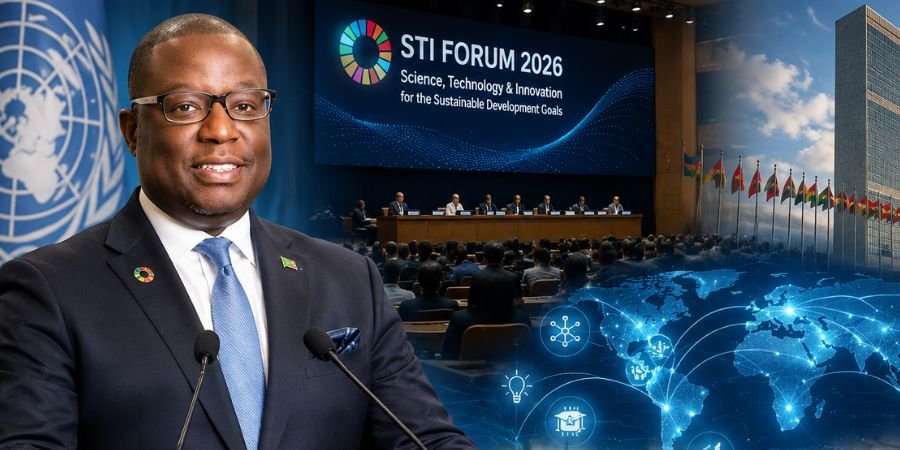
Ambassador Chola Milambo officially opened the 2026 United Nations Science, Technology, and Innovation (STI) Forum at the United Nations Headquarters today, bringing together policymakers, educators, innovators, and global development leaders to accelerate progress on the Sustainable Development Goals (SDGs).
As Co-Chair of the global summit, Milambo emphasized the urgent need for international cooperation in science, technology, and innovation to address growing inequalities in education, infrastructure, and digital access. The forum is expected to shape policy discussions around how emerging technologies can help nations meet the UN’s 2030 development agenda.
The Chola Milambo UN STI Forum 2026 event immediately gained international attention due to Milambo’s growing influence in educational transformation and digital inclusion strategies.
Why Chola Milambo Is Trending Globally
Ambassador Chola Milambo is currently trending among global educators and development experts for his framework centered on “Capacity-building and Matchmaking,” a strategy designed to help developing nations gain access to advanced educational technologies and innovation ecosystems.
The framework encourages partnerships between governments, private technology firms, universities, and international organizations. Its primary goal is to reduce the digital divide by connecting underserved regions with funding, technical expertise, and scalable digital learning solutions.
Several national education ministries are reportedly reviewing or adopting parts of the model to modernize classrooms, improve STEM education access, and expand digital literacy programs for students in low-resource communities.
The Chola Milambo UN STI Forum 2026 discussions are expected to further amplify these initiatives as countries seek practical solutions to technology inequality.
Focus Areas of the 2026 UN STI Forum
This year’s UN STI Forum places a strong focus on sustainable innovation, equitable technology access, and inclusive education systems. Delegates are discussing how artificial intelligence, digital infrastructure, and scientific collaboration can contribute to achieving the SDGs faster and more effectively.
Ambassador Milambo highlighted that innovation should not remain concentrated in developed economies. Instead, he called for “shared global capacity” that allows developing nations to actively participate in technological progress.
Key sessions at the forum are expected to address:
- Digital education expansion
- AI-driven learning systems
- Climate-focused innovation
- Public-private technology partnerships
- Youth access to STEM opportunities
The Chola Milambo UN STI Forum 2026 summit is also drawing attention from international organizations seeking scalable models for education and economic development.
Growing Influence in Global Education Policy
Milambo’s leadership at the forum reflects his increasing prominence in international policy discussions related to education and sustainable technology development. Analysts say his emphasis on long-term institutional partnerships has resonated with governments searching for practical pathways to digital transformation.
Education experts attending the summit noted that the “Capacity-building and Matchmaking” framework stands out because it focuses not only on technology access, but also on training educators, strengthening institutions, and building local innovation ecosystems.
This broader approach has positioned Milambo as a key voice in conversations about equitable global development and educational modernization.
What Happens Next
As the 2026 UN STI Forum continues over the coming days, global leaders are expected to announce new partnerships, investment initiatives, and collaborative education programs tied to the Sustainable Development Goals.
With growing international interest in digital equity and inclusive innovation, Ambassador Chola Milambo’s proposals may play an increasingly important role in shaping future education and technology policies worldwide.
Also Read: Sally Mapstone IHEF 2026: Western Universities Must Adapt