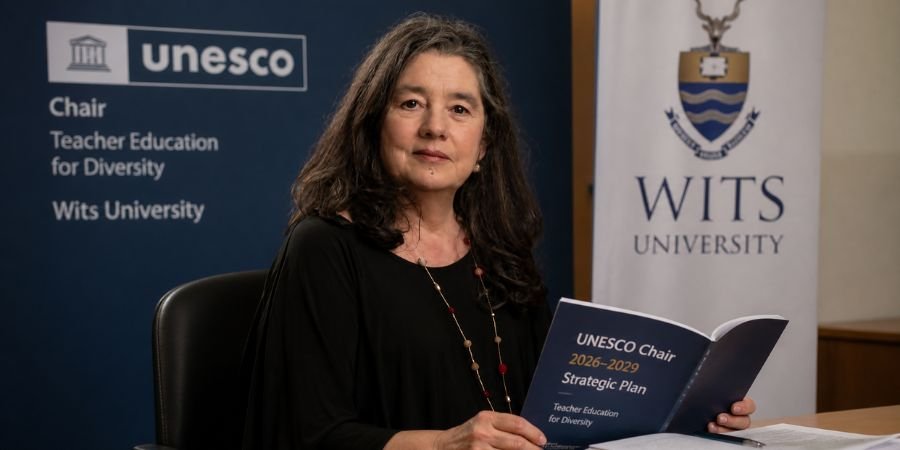
Professor Ruksana Osman Launches UNESCO Strategic Plan
Professor Ruksana Osman, Senior Deputy Vice-Chancellor at University of the Witwatersrand, has officially launched the UNESCO Chair’s 2026–2029 Strategic Plan. The initiative centers on “Teacher Education for Diversity” and aims to create equitable, accessible education resources across the Global South.
The plan outlines a multi-year framework designed to address disparities in teacher training, curriculum design, and access to quality education. It emphasizes inclusivity, cultural relevance, and sustainable development in education systems worldwide.
Focus on Teacher Education for Diversity
At the heart of the UNESCO Chair’s strategy is a commitment to transforming teacher education. The initiative promotes culturally responsive teaching practices that reflect the diverse realities of students, particularly in underrepresented regions.
Professor Ruksana Osman highlighted the importance of equipping educators with tools that go beyond traditional methods. The plan encourages integrating local knowledge systems into mainstream education, ensuring that learning is both globally competitive and locally meaningful.
Why Professor Ruksana Osman Is Trending
Professor Ruksana Osman is currently trending due to her pioneering approach to blending indigenous knowledge systems with global STEM curricula. This innovative model is gaining international attention as universities in Europe and Asia explore its potential for fostering inclusive academic growth.
Her work challenges conventional education frameworks by bridging the gap between traditional knowledge and modern scientific disciplines. This approach is seen as a key step toward creating more equitable and representative education systems worldwide.
Global Impact and Strategic Vision
The UNESCO Chair’s 2026–2029 Strategic Plan aims to strengthen collaboration among academic institutions, policymakers, and educators across continents. By focusing on the Global South, the initiative seeks to address long-standing inequalities in education infrastructure and resource distribution.
The plan also aligns with broader global goals, including sustainable development and social inclusion. It underscores the role of education as a catalyst for economic growth and societal transformation.
What Comes Next
As the plan moves into its implementation phase, academic institutions worldwide are expected to adopt and adapt its framework. With growing international interest, Professor Ruksana Osman’s model could redefine how education systems balance global standards with local relevance in the years ahead.
Also Read: Rose Luckin Pedagogy First Sets New Global AI Learning Standard