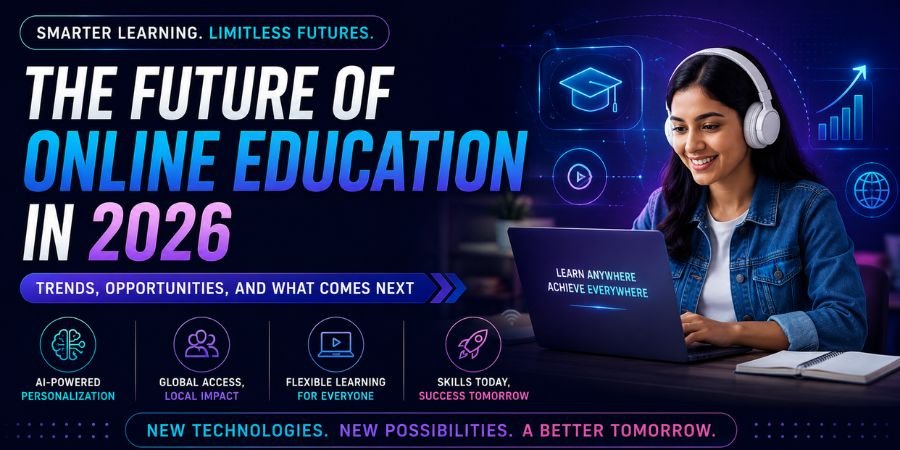
A decade ago, online learning was often viewed as a backup option for students who could not attend traditional classrooms. Today, it has become one of the fastest-growing industries in the world, reshaping how people learn, work, and build careers. From AI-powered tutoring systems to immersive virtual classrooms, the future of online education is no longer a distant concept—it is already unfolding in real time.
The global shift toward remote work, digital entrepreneurship, and skills-based hiring has accelerated demand for flexible education models. Professionals are now learning coding from home, creators are monetizing niche expertise, and businesses are investing heavily in workforce upskilling through digital platforms. In 2026, online education is evolving beyond recorded lectures and PDFs into highly personalized, interactive, and career-focused learning ecosystems.
For entrepreneurs, educators, startups, and even side-income seekers, this transformation also opens massive business opportunities. Low-investment online education models are becoming increasingly profitable, especially in specialized niches where demand is growing faster than traditional institutions can respond.
This guide explores the biggest trends shaping the future of online education, the technologies driving the industry forward, practical business opportunities emerging from these changes, and how beginners can participate in this booming digital economy.
Why Online Education Is Growing Faster Than Traditional Learning
The rise of online learning is not simply a technological shift. It reflects a major change in how society values education.
Traditional education systems were designed for stability and standardization. However, the modern economy rewards adaptability, continuous skill development, and digital fluency. People no longer learn only once in college and rely on those skills for life. Instead, professionals now upgrade their expertise continuously to stay competitive.
Several major forces are driving this transition.
Demand for Flexible Learning
Modern learners want education that fits around their schedules. Employees, parents, freelancers, and entrepreneurs often cannot commit to fixed classroom hours.
Online learning solves this by offering:
- Self-paced lessons
- Mobile learning access
- Short-form skill modules
- On-demand video instruction
- Remote certification programs
A working professional can now learn data analytics after office hours or study graphic design during weekends without leaving home.
Rising Cost of Traditional Education
Tuition costs continue to rise globally. Many students question whether expensive degrees provide enough return on investment.
Online education platforms offer affordable alternatives through:
- Subscription learning
- One-time courses
- Community memberships
- Skill bootcamps
- Industry-specific certifications
This affordability has expanded access to education for millions of learners worldwide.
Employers Focus on Skills Over Degrees
In 2026, many employers prioritize practical skills more than formal qualifications. Companies increasingly hire candidates who can demonstrate real-world abilities.
This shift benefits online learners because they can rapidly gain job-ready skills in areas such as:
- AI tools
- Digital marketing
- Web development
- Video editing
- Automation systems
- Content creation
- Cybersecurity
The faster pace of technology also means traditional curricula often become outdated quickly, while online learning platforms can update content almost instantly.
The Biggest Trends Shaping the Future of Online Education
The future of online education is being defined by several interconnected trends. These innovations are transforming how courses are created, delivered, and monetized.
AI-Powered Personalized Learning
Artificial intelligence is becoming the backbone of modern education systems.
Instead of offering identical lessons to every student, AI-driven platforms now personalize the learning experience based on:
- Skill level
- Learning speed
- Performance patterns
- Attention span
- Preferred content formats
For example, a student struggling with coding concepts may automatically receive additional exercises, simplified explanations, and interactive practice modules.
Meanwhile, advanced learners can skip foundational lessons and move directly into complex topics.
How AI Changes Online Learning
AI systems can now:
- Generate custom quizzes
- Provide instant feedback
- Recommend study plans
- Detect learning gaps
- Create adaptive lesson paths
- Simulate tutoring conversations
This dramatically improves retention and engagement.
For online education businesses, AI also reduces operational costs because automated systems can handle many tasks previously requiring human instructors.
Microlearning and Short-Form Education
Long lectures are losing popularity. Modern learners increasingly prefer short, focused learning sessions.
Microlearning involves breaking topics into bite-sized lessons lasting between 5 and 15 minutes.
This trend works particularly well because:
- Attention spans are shorter
- Mobile learning is increasing
- People learn during small breaks
- Short lessons feel less overwhelming
Platforms using microlearning formats often see higher course completion rates.
Business Opportunity in Microlearning
This creates excellent opportunities for entrepreneurs.
Instead of building massive academic-style courses, creators can launch niche educational products such as:
- 10-minute finance lessons
- Daily language practice
- Quick business tutorials
- AI productivity hacks
- Short marketing case studies
Low-investment creators can build profitable online businesses by focusing on highly targeted learning outcomes.
Virtual Reality and Immersive Classrooms
Virtual reality is gradually transforming online education into a more interactive experience.
In fields such as medicine, engineering, architecture, and science, VR allows students to practice in simulated environments.
Examples include:
- Virtual surgical training
- Interactive chemistry labs
- Engineering simulations
- Historical recreations
- Architecture walkthroughs
Immersive learning increases engagement because students actively participate instead of passively consuming information.
Why VR Education Will Expand
As VR hardware becomes more affordable, educational adoption will rise.
Businesses entering this market early may find strong opportunities in:
- VR course development
- Interactive educational experiences
- Corporate simulation training
- Educational gaming
This niche remains relatively underdeveloped compared to traditional online learning.
Community-Based Learning Platforms
Online education is becoming more social.
Many learners now value community support as much as the educational content itself.
Modern platforms integrate:
- Group discussions
- Live workshops
- Peer accountability
- Networking communities
- Collaborative projects
Communities improve motivation and reduce dropout rates.
The Rise of Membership Learning Models
Subscription communities are becoming a major online business trend.
Instead of selling one-time courses, educators now monetize through:
- Private communities
- Monthly memberships
- Live mentorship groups
- Exclusive learning networks
This model creates recurring income while building stronger audience loyalty.
For beginners, launching a niche learning community can be a low-cost entrepreneurship opportunity.
Mobile-First Education
In many regions, smartphones are now the primary learning device.
Educational platforms are increasingly designed for mobile experiences rather than desktop usage.
This changes how content is structured.
Successful mobile-first courses focus on:
- Vertical video
- Short lessons
- Interactive quizzes
- Downloadable resources
- Offline learning access
Opportunities for Small Businesses
Entrepreneurs can create mobile-friendly educational brands targeting specific demographics such as:
- Busy professionals
- Rural learners
- Freelancers
- Students preparing for exams
- Remote workers
The accessibility of mobile learning significantly expands global market reach.
Skill-Based Certifications Replace Traditional Credentials
Certificates from specialized online platforms are becoming more valuable in many industries.
Employers increasingly trust practical skill assessments over generic academic credentials.
Popular areas include:
- Cloud computing
- AI engineering
- Digital marketing
- UX design
- Video production
- Cybersecurity
- Data science
This trend benefits online education startups because they can quickly develop industry-relevant certification programs.
Why Certifications Matter in 2026
The job market evolves rapidly.
Workers now need:
- Continuous upskilling
- Faster learning cycles
- Industry-specific training
- Portfolio-based proof of skill
Traditional degree programs often move too slowly to keep up.
Online certification businesses can fill this gap effectively.
The Business Side of the Future of Online Education
The online education industry is not only changing learning—it is also creating enormous business opportunities.
Many low-investment online businesses now revolve around education and digital knowledge sharing.
Why Online Education Is Attractive for Entrepreneurs
Compared to traditional businesses, online education offers several advantages:
Low Startup Costs
You can launch an educational business using:
- A smartphone
- Basic recording equipment
- Affordable software
- Social media marketing
There is no need for physical classrooms or large teams initially.
Global Audience Reach
A local teacher can now reach international students through digital platforms.
This global scalability is one of the biggest reasons education entrepreneurship is booming.
High Profit Margins
Digital products have low reproduction costs.
Once a course is created, it can generate revenue repeatedly with minimal additional expense.
Recurring Revenue Models
Education businesses can monetize through:
- Membership subscriptions
- Coaching programs
- Certification fees
- Community access
- Corporate training
Recurring revenue improves long-term business stability.
Best Low Investment Online Education Business Ideas in 2026
The future of online education creates opportunities far beyond traditional teaching.
Here are some of the most promising startup ideas.
Niche Skill Academy
Instead of competing with giant platforms, entrepreneurs can focus on highly specialized niches.
Examples include:
- AI prompt engineering
- Real estate content marketing
- Freelance proposal writing
- E-commerce product photography
- YouTube thumbnail design
Niche specialization often leads to stronger audience trust and higher pricing power.
Startup Steps
- Identify a high-demand niche
- Research audience problems
- Create beginner-friendly lessons
- Build a small audience through content
- Launch paid workshops or memberships
Corporate Upskilling Services
Businesses increasingly need digital workforce training.
Small education startups can offer:
- AI training for employees
- Cybersecurity awareness
- Productivity software training
- Leadership development
- Remote work optimization
This B2B model can generate higher revenue than consumer-focused courses.
Language Learning Communities
Language learning remains one of the strongest online education markets.
However, modern learners increasingly prefer:
- Conversation groups
- Cultural immersion communities
- Daily practice systems
- Interactive speaking clubs
Entrepreneurs can create highly engaging membership-based learning ecosystems.
Creator Education Platforms
Content creators now need education in:
- Video editing
- Personal branding
- Monetization
- AI content tools
- Audience growth
This industry continues expanding rapidly as digital entrepreneurship becomes mainstream.
Educational Newsletter Business
Many entrepreneurs overlook newsletters as an education business model.
A niche educational newsletter can monetize through:
- Paid subscriptions
- Sponsorships
- Premium reports
- Community memberships
Examples include newsletters focused on:
- AI business tools
- Startup strategy
- Social media growth
- Financial literacy
This is one of the lowest-investment online business models available today.
How Beginners Can Start an Online Education Business
One major reason the future of online education matters is accessibility. Beginners no longer need massive budgets or formal teaching credentials to enter the industry.
What matters most is practical expertise and audience trust.
Step 1: Choose a Problem-Solving Niche
The best educational businesses solve specific problems.
Weak niche example:
- “Business education”
Strong niche example:
- “How freelancers find international clients”
Specificity improves marketing, positioning, and audience engagement.
Step 2: Validate Market Demand
Before creating products, study audience demand.
Use platforms such as:
- Search engines
- Reddit communities
- YouTube comments
- Social media discussions
- Online forums
Look for repeated frustrations and questions.
These pain points become valuable educational opportunities.
Step 3: Build an Audience Before Selling
One common beginner mistake is creating courses before building trust.
Instead, start by sharing:
- Educational videos
- Tutorials
- Case studies
- Free guides
- Social media content
Audience trust dramatically improves conversions later.
Step 4: Start With Simple Offers
You do not need a massive course immediately.
Start with:
- Mini workshops
- Group coaching
- Live sessions
- Digital templates
- Paid webinars
This reduces risk while testing demand.
Step 5: Improve Through Feedback
Successful education businesses continuously evolve.
Pay attention to:
- Student questions
- Completion rates
- Feedback patterns
- Common confusion areas
The best platforms improve based on real user behavior.
Common Mistakes Beginners Make in Online Education
Many new creators fail because they misunderstand how online learning businesses actually work.
Trying to Compete With Massive Platforms
New entrepreneurs often try to imitate giant companies.
This rarely works.
Instead of competing broadly, focus narrowly on specific audience needs.
Niche expertise often beats generic content.
Overproducing Content Too Early
Many beginners spend months creating large courses without validating demand.
This increases risk.
Start lean and test small educational products first.
Ignoring Community Building
Courses alone are becoming less valuable.
People increasingly pay for:
- Accountability
- Support
- Networking
- Direct access
- Mentorship
Community engagement is becoming a major competitive advantage.
Focusing Only on Information
Information is everywhere.
Successful education businesses focus on transformation instead.
Students care about outcomes, not content volume.
For example:
- “Learn marketing” is weak.
- “Get your first five clients using Instagram” is outcome-focused.
Real-World Examples of Online Education Success
Understanding practical examples helps reveal how diverse the industry has become.
Example 1: The Solo Skill Creator
A freelance designer starts posting short typography tutorials on social media.
After building an audience, they launch:
- A paid workshop
- A design template library
- A private community
Within two years, the creator earns recurring monthly income from subscriptions rather than client work alone.
Why This Works
- Clear niche
- Audience-first approach
- Community-driven engagement
- Practical outcomes
Example 2: Corporate AI Training Startup
A small team notices businesses struggling with AI adoption.
They create training programs teaching employees how to use:
- AI writing tools
- Workflow automation
- Data analysis systems
Instead of targeting consumers, they sell directly to companies.
Why This Works
- High market demand
- Businesses pay premium pricing
- Ongoing training requirements
- Rapidly evolving technology
Example 3: Educational Newsletter Brand
A finance enthusiast creates a simple email newsletter explaining investing concepts for beginners.
The audience grows through social media and referrals.
Later monetization includes:
- Premium memberships
- Sponsored partnerships
- Financial literacy courses
This business started with almost no upfront investment.
The Role of AI in the Future of Online Education
Artificial intelligence deserves deeper attention because it will reshape nearly every aspect of learning.
AI Tutors and Learning Assistants
Students increasingly interact with AI learning companions that provide:
- Instant answers
- Personalized explanations
- Adaptive quizzes
- Learning recommendations
These systems can simulate one-on-one tutoring experiences at scale.
Automated Course Creation
AI tools now help educators:
- Generate lesson outlines
- Create quizzes
- Summarize content
- Translate materials
- Design visuals
This reduces production time significantly.
Small creators can now compete more effectively with larger organizations.
AI-Powered Career Pathways
Future platforms may increasingly connect education directly with employment opportunities.
AI systems can recommend:
- Skills to learn
- Career transitions
- Salary opportunities
- Industry demand trends
This career-focused personalization will become increasingly valuable.
How Schools and Universities Are Adapting
Traditional institutions are also evolving rapidly.
Hybrid Learning Models
Many schools now combine:
- Online lectures
- In-person workshops
- Digital assignments
- Virtual collaboration
Hybrid learning offers flexibility while preserving social interaction.
University Partnerships With Tech Platforms
Universities increasingly collaborate with technology companies to offer:
- Online certifications
- Professional training
- Industry-focused programs
This helps institutions remain competitive in changing markets.
Focus on Lifelong Learning
Education is shifting from a one-time experience to a lifelong process.
Universities are beginning to serve:
- Mid-career professionals
- Remote learners
- Entrepreneurs
- Career switchers
Continuous education is becoming the new norm.
Future Challenges in Online Education
Despite rapid growth, several challenges remain.
Information Overload
The internet contains endless educational content.
Students often struggle to identify:
- Reliable information
- High-quality instructors
- Practical courses
Trust and credibility will become increasingly important.
Motivation and Completion Rates
Many online learners fail to complete courses.
Successful platforms must improve:
- Engagement systems
- Accountability structures
- Community interaction
- Gamification
Digital Inequality
Not all learners have equal access to:
- Internet infrastructure
- Devices
- Digital literacy
Governments and organizations will need to address these gaps.
Data Privacy and Ethical AI
As AI-driven learning expands, concerns around:
- Student data
- Privacy protection
- Algorithm bias
- Educational fairness
will become more important.
Responsible platforms will need transparent policies and ethical safeguards.
What the Future of Online Education Means for Society
The future of online education extends far beyond business trends.
It may fundamentally reshape:
- Employment systems
- Economic mobility
- Global education access
- Entrepreneurship opportunities
People from remote regions can now access world-class knowledge without relocating.
Professionals can reinvent careers without returning to traditional universities.
Creators can build businesses around expertise once considered too niche to monetize.
This democratization of education may become one of the most significant social transformations of the digital era.
Frequently Asked Questions
What is the future of online education in 2026?
The future of online education includes AI-powered personalized learning, immersive virtual classrooms, mobile-first education, microlearning, and industry-focused certifications. Online learning is becoming more flexible, interactive, and career-oriented.
Is online education a good business opportunity?
Yes. Online education offers low startup costs, global scalability, recurring revenue opportunities, and growing market demand. Many entrepreneurs are building successful niche learning businesses with minimal investment.
Which online education niches are growing fastest?
Fast-growing niches include AI tools, digital marketing, cybersecurity, content creation, coding, productivity systems, remote work skills, and financial literacy education.
How can beginners start an online education business?
Beginners should start by choosing a niche problem, validating audience demand, building trust through free content, and launching simple educational products such as workshops or memberships.
Will AI replace teachers in online education?
AI will likely support teachers rather than replace them entirely. Human mentorship, emotional understanding, community building, and real-world expertise remain highly valuable in education.
Conclusion
The future of online education is not simply about replacing classrooms with screens. It represents a much larger transformation in how people acquire skills, build careers, and create economic opportunities in a rapidly changing world.
In 2026, learning is becoming more personalized, accessible, and deeply connected to real-world outcomes. Artificial intelligence, mobile technology, virtual experiences, and community-driven platforms are reshaping education into something far more flexible than traditional systems ever allowed.
For entrepreneurs, creators, and professionals, this shift creates extraordinary possibilities. Small online businesses can now teach specialized skills to global audiences, while learners can access practical education without the financial and geographic limitations that once restricted opportunity.
The most successful players in this evolving industry will not simply sell information. They will help people achieve meaningful transformation, solve real problems, and adapt to the demands of a digital-first economy.
As technology continues to evolve, one thing is becoming increasingly clear: education is no longer a stage of life. It is becoming a lifelong, continuously evolving experience—and online learning will sit at the center of that future.
Also Read: AI in Education Examples in 2026: How Artificial Intelligence Is Transforming Learning