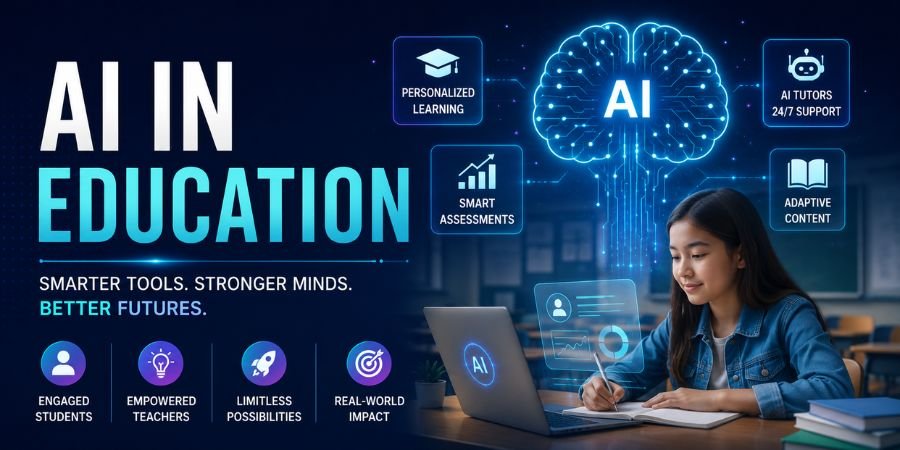
A few years ago, personalized learning sounded like an expensive luxury available only in elite schools. Today, students can receive instant feedback, AI-generated study plans, language tutoring, and adaptive learning experiences directly from a smartphone or laptop. From automated grading systems to intelligent tutoring platforms, the rise of ai in education is no longer experimental—it is becoming a core part of how modern learning works.
Schools, universities, coaching institutes, and online educators are using artificial intelligence to improve learning outcomes, reduce administrative workload, and create more engaging educational experiences. At the same time, parents and students are discovering tools that make studying faster, more personalized, and accessible from anywhere in the world.
The shift is especially important in 2026 because digital learning is no longer limited to online classes. AI now supports curriculum planning, student performance analysis, language translation, accessibility for disabled learners, and career guidance. Whether someone is a teacher, entrepreneur, student, or startup founder, understanding real-world AI applications in education has become increasingly valuable.
This guide explores practical examples, business opportunities, implementation strategies, benefits, challenges, and future trends shaping AI-powered education today.
What Is AI in Education?
Artificial intelligence in education refers to the use of machine learning, natural language processing, predictive analytics, and automation technologies to improve teaching and learning experiences.
Instead of delivering the same content to every student in the same way, AI systems analyze behavior, learning speed, strengths, weaknesses, and engagement levels to create more personalized educational experiences.
In practical terms, AI can:
- Recommend lessons based on student performance
- Automatically grade assignments
- Provide instant tutoring assistance
- Translate content into multiple languages
- Detect learning gaps
- Create customized quizzes
- Help teachers manage classrooms more efficiently
The goal is not to replace teachers. The most effective systems use AI to support educators by reducing repetitive tasks and improving student engagement.
Why AI in Education Is Growing Rapidly in 2026
Several factors are accelerating the adoption of AI in schools and learning platforms.
Increased Demand for Personalized Learning
Traditional classrooms struggle to accommodate different learning speeds. Some students learn quickly, while others need additional explanations and practice.
AI-powered platforms can adjust lessons dynamically based on:
- Quiz performance
- Attention span
- Learning patterns
- Subject difficulty
- Engagement level
This creates a more customized learning experience.
Growth of Remote and Hybrid Learning
Online learning expanded dramatically over the past few years. Educational institutions now require systems that can:
- Track student progress remotely
- Provide automated support
- Scale teaching resources
- Improve digital engagement
AI helps solve these challenges efficiently.
Teacher Workload Reduction
Teachers spend significant time on repetitive tasks such as:
- Grading
- Attendance tracking
- Report creation
- Student performance analysis
AI tools automate many of these processes, allowing teachers to focus more on instruction and mentoring.
Affordable AI Tools
Cloud-based AI platforms and open-source tools have made advanced educational technology accessible even for small institutions and independent educators.
Many AI-powered learning tools now operate on subscription models affordable for startups, coaching centers, and freelancers.
Real-World AI in Education Examples
Understanding practical applications helps explain why AI is becoming so influential in modern education.
AI-Powered Personalized Learning Platforms
One of the most important examples of AI in education is adaptive learning software.
These systems analyze how students interact with lessons and then adjust the content accordingly.
How It Works
If a student struggles with algebra but performs well in geometry, the platform may:
- Slow down algebra lessons
- Offer additional exercises
- Recommend video explanations
- Provide easier examples first
Meanwhile, advanced students can move faster without waiting for the class.
Practical Impact
Personalized learning improves:
- Retention rates
- Student confidence
- Engagement
- Exam performance
This approach is especially effective in:
- Test preparation
- Language learning
- STEM subjects
- Skill-based courses
AI Tutors and Virtual Assistants
AI tutors are becoming increasingly common in schools and online education platforms.
These systems answer questions instantly and guide students through difficult concepts.
Common Features
AI tutors can:
- Explain problems step-by-step
- Generate practice questions
- Offer writing suggestions
- Correct grammar
- Simulate conversations for language learning
Unlike traditional tutoring, AI tutors are available 24/7.
Real-World Scenario
A student studying late at night may ask an AI assistant to explain a physics formula multiple times in different ways until the concept becomes clear.
This immediate support significantly improves independent learning.
Automated Grading Systems
Teachers often spend hours grading assignments and tests.
AI grading systems can evaluate:
- Multiple-choice exams
- Short answers
- Essays
- Coding assignments
- Language exercises
Benefits
Automated grading:
- Saves time
- Reduces human error
- Provides faster feedback
- Identifies learning trends
Example
An English teacher managing 200 students can use AI to evaluate grammar, sentence structure, and readability before manually reviewing final submissions.
This dramatically reduces workload.
AI for Language Learning
Language education has experienced one of the biggest transformations through AI.
Modern language apps use artificial intelligence to:
- Analyze pronunciation
- Simulate conversations
- Detect grammar mistakes
- Adapt vocabulary difficulty
- Track fluency improvement
Why It Works Well
AI systems excel in repetitive practice environments.
Students can practice speaking without fear of embarrassment, making learning more comfortable and accessible.
Practical Example
A learner studying Spanish can receive pronunciation corrections instantly after speaking into an app.
This creates a highly interactive learning process.
Smart Content Creation
AI can now generate educational materials quickly.
Teachers and course creators use AI tools to create:
- Quiz questions
- Lesson summaries
- Study guides
- Flashcards
- Presentations
- Worksheets
Advantages for Educators
This saves substantial preparation time while improving productivity.
Instead of spending hours formatting content, teachers can focus on teaching quality and student interaction.
Predictive Analytics for Student Performance
AI systems can analyze student behavior and predict academic risks before they become serious problems.
What AI Can Detect
Predictive systems may identify:
- Low engagement
- Poor attendance patterns
- Declining grades
- Missed assignments
- Reduced participation
Why This Matters
Early intervention helps schools support struggling students before they fail courses or drop out.
This is especially valuable in large institutions where individual monitoring is difficult.
AI-Based Accessibility Tools
Artificial intelligence is improving education accessibility for students with disabilities.
Examples include:
- Speech-to-text systems
- Real-time subtitles
- AI reading assistants
- Text simplification tools
- Visual recognition systems
Real Impact
Students with hearing, visual, or learning difficulties can access educational content more independently.
This creates more inclusive learning environments.
Intelligent Content Recommendations
Streaming platforms recommend movies based on viewing behavior. Education platforms now use similar AI models.
Students receive:
- Recommended lessons
- Practice exercises
- Skill-building activities
- Career-oriented courses
based on their learning history.
Example
A student interested in graphic design may receive recommendations for:
- UI/UX courses
- Animation tutorials
- Portfolio-building exercises
- Freelancing skills
This encourages continuous learning.
How Schools and Universities Are Using AI
Educational institutions are integrating AI beyond classrooms.
Administrative Automation
Schools use AI for:
- Timetable scheduling
- Fee management
- Enrollment systems
- Attendance tracking
- Parent communication
Automation reduces operational costs and improves efficiency.
AI Chatbots for Student Support
Universities now use AI chatbots to answer common student questions about:
- Admissions
- Deadlines
- Exam schedules
- Campus services
- Financial aid
This improves response times while reducing staff workload.
Plagiarism and Academic Integrity Monitoring
AI tools can detect:
- Plagiarism
- AI-generated content misuse
- Unusual writing patterns
- Exam cheating behaviors
Maintaining academic integrity has become increasingly important in digital education environments.
AI in Education for Different Learning Levels
AI applications vary depending on the age group and educational goals.
Primary Education
Young students benefit from:
- Gamified learning
- Interactive storytelling
- Visual learning support
- Reading assistance
AI keeps children engaged while adapting lessons to their pace.
Secondary Education
Middle and high school students use AI for:
- Homework assistance
- Exam preparation
- Science simulations
- Language practice
- Career exploration
These tools support both classroom learning and self-study.
Higher Education
Universities use AI for:
- Research assistance
- Personalized course recommendations
- Virtual laboratories
- Student analytics
- Automated assessment systems
AI also supports large-scale online learning programs.
Corporate and Professional Learning
Businesses use AI-based learning systems for employee training.
Examples include:
- Compliance training
- Skill assessments
- Personalized learning paths
- Leadership development
- Technical certification programs
This creates more efficient workforce education systems.
Benefits of AI in Education
The popularity of AI in education is driven by measurable advantages.
Personalized Learning Experiences
Students receive content suited to their individual needs rather than standardized lessons.
This improves:
- Motivation
- Understanding
- Academic performance
Faster Feedback
Immediate feedback helps students correct mistakes quickly.
Instead of waiting days for assignment evaluation, learners can improve in real time.
Improved Accessibility
AI enables education access for students with:
- Disabilities
- Language barriers
- Geographic limitations
This expands educational opportunities globally.
Scalability
A single teacher can support more students effectively using AI-powered systems.
This is especially important in regions facing teacher shortages.
Better Student Engagement
Gamification, interactive lessons, and adaptive content keep students more involved in learning.
Engaged students typically retain information better.
Reduced Administrative Burden
Automation allows educators to spend more time teaching and mentoring rather than handling repetitive tasks.
Challenges and Risks of AI in Education
Despite its advantages, AI also introduces important concerns.
Overdependence on Technology
Students may become too reliant on AI tools for answers instead of developing independent critical thinking skills.
Balance remains essential.
Data Privacy Concerns
Educational AI systems collect large amounts of student data.
This raises concerns about:
- Data storage
- Privacy protection
- Security breaches
- Ethical use of information
Institutions must implement strong privacy policies.
Accuracy Problems
AI-generated responses are not always correct.
Students and teachers still need human verification for important academic work.
Reduced Human Interaction
Education involves emotional support, mentorship, and social development.
AI cannot fully replace human teachers in these areas.
Digital Divide
Not all students have equal access to:
- Internet connections
- Devices
- Paid AI tools
This can increase educational inequality.
Best AI Tools Used in Education in 2026
Several categories of AI tools dominate the education sector today.
AI Writing Assistants
These tools help students improve:
- Grammar
- Clarity
- Structure
- Vocabulary
- Research organization
They are widely used for essays and reports.
Adaptive Learning Platforms
These systems personalize learning pathways and track progress.
Popular features include:
- Skill analysis
- Dynamic quizzes
- Progress dashboards
- AI recommendations
AI Presentation and Content Tools
Teachers and students use AI to generate:
- Slides
- Visual explanations
- Infographics
- Educational videos
This improves content quality while saving time.
AI Coding Tutors
Programming education increasingly uses AI coding assistants.
These tools help learners:
- Debug code
- Understand syntax
- Practice exercises
- Learn programming logic
This makes technical education more accessible.
Step-by-Step Guide to Implementing AI in Education
Educational institutions and independent educators should approach AI strategically.
Step 1: Identify Learning Problems
Before choosing tools, define the actual challenge.
Examples include:
- Low student engagement
- Slow grading processes
- Poor learning outcomes
- Limited accessibility
Clear goals improve implementation success.
Step 2: Start Small
Instead of replacing entire systems immediately, begin with one or two AI solutions.
For example:
- AI grading software
- Homework assistants
- Adaptive quizzes
Small experiments reduce risk.
Step 3: Train Teachers and Staff
Technology adoption fails when users do not understand the tools.
Provide training on:
- AI capabilities
- Limitations
- Ethical usage
- Classroom integration
Teacher confidence is essential.
Step 4: Monitor Results
Track measurable improvements such as:
- Student participation
- Grade improvement
- Time savings
- Retention rates
Use real data to evaluate effectiveness.
Step 5: Maintain Human Oversight
AI should support educators—not completely replace them.
Human judgment remains essential for:
- Emotional support
- Critical thinking guidance
- Ethical decisions
- Classroom management
AI in Education Business Opportunities
The growth of educational AI has created major entrepreneurial opportunities.
AI-Powered Online Tutoring
Entrepreneurs can build tutoring businesses using AI-assisted learning systems.
Low investment requirements make this attractive for:
- Teachers
- Subject experts
- Freelancers
Educational Content Creation
There is growing demand for:
- AI-generated study materials
- Interactive courses
- Educational videos
- Personalized learning modules
Course creators can scale faster using AI tools.
AI Consulting for Schools
Many schools need guidance on:
- Tool selection
- AI integration
- Staff training
- Privacy policies
Consulting services represent a growing niche.
Language Learning Platforms
AI-driven language learning continues to expand globally.
Opportunities include:
- Regional language apps
- Pronunciation tools
- Conversation simulators
- Translation learning systems
Skill-Based Microlearning Platforms
Short-form AI-driven learning apps are increasingly popular among professionals seeking rapid skill development.
Topics include:
- Coding
- Marketing
- Finance
- Design
- Communication
Practical Examples of AI in Education
Understanding realistic use cases helps explain AI’s impact more clearly.
Example 1: AI-Assisted Coaching Institute
A small exam coaching center uses AI analytics to identify weak student areas.
The system automatically recommends:
- Extra practice questions
- Revision schedules
- Personalized tests
As a result, student performance improves without increasing teacher workload.
Example 2: Language Learning Startup
A startup develops an AI app that evaluates pronunciation for regional Indian languages.
Users receive:
- Speaking corrections
- Daily vocabulary challenges
- Personalized practice plans
The platform grows rapidly because mobile-based learning is accessible and affordable.
Example 3: University Student Support Bot
A university deploys an AI chatbot to answer student inquiries.
The chatbot handles thousands of requests about:
- Course registration
- Hostel facilities
- Exam schedules
- Payment deadlines
Administrative efficiency improves significantly.
Example 4: AI-Based Coding Platform
A coding platform uses AI to evaluate student code submissions instantly.
Learners receive:
- Error explanations
- Optimization suggestions
- Performance feedback
This speeds up technical learning dramatically.
Common Mistakes People Make With AI in Education
Many organizations adopt AI incorrectly.
Using AI Without Clear Goals
Implementing technology without solving a real problem often wastes money and creates confusion.
Ignoring Teacher Training
Even powerful AI tools fail when educators do not understand how to use them effectively.
Replacing Human Interaction Completely
Students still require mentorship, empathy, and emotional support.
AI should enhance—not eliminate—human teaching.
Trusting AI Blindly
AI systems can produce inaccurate information.
Verification remains necessary.
Overcomplicating Systems
Simple AI tools often produce better results than highly complex systems that users struggle to adopt.
Future Trends of AI in Education
The next few years will likely transform education even further.
Hyper-Personalized Learning
Future systems may create fully individualized learning journeys for each student.
Lessons, pacing, and assessments could become completely adaptive.
AI-Generated Virtual Teachers
Advanced AI avatars may eventually simulate highly interactive classroom experiences.
These systems could support remote education globally.
Emotion Recognition Technology
Some experimental systems analyze facial expressions and engagement levels to identify when students are confused or distracted.
Ethical concerns remain important here.
Immersive AI Learning Environments
AI combined with virtual reality may create interactive simulations for:
- Science experiments
- Medical training
- Engineering practice
- Historical education
This could revolutionize practical learning.
AI Career Guidance Systems
Future educational platforms may provide highly personalized career recommendations based on:
- Interests
- Learning patterns
- Skills
- Industry demand
This may help students make better career decisions earlier.
How Teachers Can Use AI Effectively
Teachers remain central to successful education systems.
The best approach is combining human expertise with AI efficiency.
Practical Teacher Strategies
Educators can use AI to:
- Generate lesson ideas
- Create quizzes quickly
- Analyze student progress
- Improve presentations
- Support struggling students
However, teachers should continue leading discussions, mentoring students, and encouraging independent thinking.
How Students Can Benefit From AI Without Becoming Dependent
Students should use AI as a learning assistant—not a shortcut.
Healthy AI Learning Habits
Good practices include:
- Using AI for explanations rather than copying answers
- Verifying information independently
- Practicing critical thinking
- Combining AI learning with books and human instruction
This creates balanced learning development.
FAQ: AI in Education
What is the best example of AI in education?
Personalized learning platforms are among the best examples because they adapt lessons based on each student’s performance, strengths, and weaknesses.
How does AI help students learn better?
AI helps students by providing instant feedback, customized lessons, interactive tutoring, and flexible learning experiences tailored to individual needs.
Can AI replace teachers completely?
No. AI can automate repetitive tasks and improve learning efficiency, but teachers remain essential for emotional support, mentorship, creativity, and classroom leadership.
Is AI in education expensive to implement?
Not always. Many cloud-based AI tools are affordable, and small institutions can start with low-cost solutions such as automated grading or AI tutoring systems.
What are the risks of AI in education?
Major risks include privacy concerns, inaccurate information, overdependence on technology, reduced human interaction, and unequal access to digital tools.
Conclusion
The rise of ai in education represents one of the most significant transformations in modern learning. Artificial intelligence is reshaping classrooms, online learning platforms, universities, and professional training systems by making education more personalized, scalable, and accessible.
The most successful educational environments in 2026 are not replacing teachers with machines. Instead, they are combining human expertise with intelligent technology to create better learning experiences. Students receive faster support, teachers save valuable time, and institutions gain deeper insights into academic performance.
At the same time, responsible implementation remains critical. Privacy, ethical concerns, and balanced technology usage will continue shaping how AI evolves within education systems worldwide.
For educators, entrepreneurs, students, and institutions, the opportunity is enormous. Those who understand how to use AI strategically today are likely to lead the future of learning tomorrow.
Also Read: Dan Clancy Net Worth 2026: Inside the Twitch CEO’s Wealth and Career